
You discover male pleasure anatomy by exploring the specific parts of your body that create sexual sensation. Knowing how areas like the glans, frenulum, and even the prostate respond lets you make informed choices about your sexual health. For example, understanding the role of anal beads can help you safely experiment with new experiences. When you learn about these pleasure zones, you gain confidence to communicate your needs and preferences with your partner. Curiosity leads to empowerment, and knowledge helps you approach your body with respect and care.
Key Takeaways
- Explore your body to discover sensitive areas that enhance pleasure. Knowledge leads to confidence in your sexual experiences.
- Understand the anatomy of the penis, including the glans, shaft, and frenulum. Each part plays a unique role in sexual pleasure.
- Experiment with different types of touch and pressure on sensitive zones. This can lead to heightened arousal and satisfaction.
- Communicate openly with your partner about your preferences. This builds trust and improves intimacy in your relationship.
- Consider exploring beyond the penis. Other erogenous zones, like the perineum and nipples, can provide new sensations.
- Practice self-exploration to learn what feels good. This knowledge helps you express your needs to partners more effectively.
- Stay informed about your body and sexual health. Understanding anatomy can reduce anxiety and challenge myths about male sexuality.
- If you notice changes in sexual function, consult a healthcare provider. Early intervention can help address potential health issues.
External Anatomy & Pleasure Zones
Understanding your external anatomy helps you recognize where pleasure starts and how you can enhance it. You might think the penis is the only focus, but your body offers many sensitive zones that contribute to sexual enjoyment. Exploring these areas gives you more control over your experiences and helps you communicate your preferences.
Penis Structure
The penis contains several distinct parts, each with a unique role in sexual pleasure. You can see how each part contributes by examining their structure and function.
| Structure | Description |
|---|---|
| Penis | The penis is an external organ involved in sexual intercourse and pleasure, becoming engorged with blood during erection. |
| Scrotum | The scrotum houses the testicles and plays a role in temperature regulation, which is important for sperm production and sexual function. |
| Part | Description | Contribution to Sexual Pleasure |
|---|---|---|
| Base | Attaches the penis to the inside of the body | Provides stability during sexual activity. |
| Shaft | The main part of the penis, an elongated tube | Contains erectile tissue that aids in erection. |
| Glans | The tip of the penis, most sensitive part, contains urethral opening | Primary source of sexual pleasure due to high sensitivity. |
Glans
You find the glans at the tip of your penis. This area contains the highest concentration of nerve endings, making it the most sensitive erogenous zone. Light touch, gentle stroking, or oral stimulation often creates intense pleasure. Many men experience heightened arousal and faster ejaculation when the glans receives focused attention. If you want to increase sensation, experiment with different types of touch or lubrication.
Tip: If you notice increased sensitivity in the glans, try varying pressure or using a softer touch to prolong pleasure.
Shaft
The shaft forms the main length of your penis. Erectile tissue inside the shaft fills with blood during arousal, causing an erection. You can stimulate the shaft with your hand, a partner’s touch, or during intercourse. Changing grip, speed, or angle can alter the sensation. The shaft provides stability and supports the glans, allowing you to explore different techniques for pleasure.
Frenulum
The frenulum is a small, V-shaped band of tissue on the underside of the glans, where it meets the shaft. This area is highly sensitive and responds well to gentle rubbing or licking. Many men report that frenulum stimulation leads to strong sexual responses and can trigger orgasm. You can focus on this spot during solo play or ask your partner to include it in foreplay.
Corona
The corona is the ridge that separates the glans from the shaft. This area contains many nerve endings and reacts to touch, pressure, or movement. You might notice increased pleasure when the corona receives attention during stroking or oral sex. Exploring the corona helps you discover new sensations and enhances your overall experience.
Scrotum & Testicles
Your scrotum is the protective sac that holds your testicles. It regulates temperature, which is vital for sperm production and sexual function. The skin of the scrotum is thin and sensitive, responding to touch, warmth, or gentle massage. The testicles produce sperm and testosterone, supporting libido and sexual health.
- You can stimulate the scrotum by softly caressing or massaging it.
- The testicles respond to gentle rolling or squeezing, but you should avoid rough handling to prevent discomfort.
- Some men enjoy having their scrotum and testicles included in foreplay, which can heighten arousal and intimacy.
Perineum
The perineum is the area between your scrotum and anus. This zone contains many nerve endings and plays a key role in sexual arousal. Massaging the perineum can increase stimulation and sometimes lead to orgasm without direct penile contact. You can use your fingers or a soft object to apply gentle pressure or circular motions.
- The perineum responds well to touch because of the PIEZO2 ion channel, which makes it sensitive to stimulation.
- You might find that perineal massage relaxes you and enhances your sexual response.
- Including the perineum in your exploration adds variety and can intensify pleasure.
Note: Always communicate with your partner about comfort and boundaries when exploring new areas.
Beyond the Penis: Other Erogenous Zones
Male pleasure is not limited to the penis. You have many other sensitive areas that can enhance your experience. Scientific research highlights several external erogenous zones:
| Erogenous Zone | Description |
|---|---|
| Ears | Highly sensitive due to thin skin and many nerve endings. Stimulating can enhance arousal. |
| Neck | Sensitive area where kissing or licking can be pleasurable. |
| Nipples | Full of nerve endings; stimulation can create intense pleasure. |
| Inner Thighs | Sensitive area that can be stimulated for pleasure. |
| Feet | Often overlooked; soles are sensitive and can be pleasurable when stimulated. |
| Scalp | Sensitive area that can be massaged for relaxation and arousal. |
| Lower Back | Sensitive area that can be stroked or massaged for pleasure. |
| Prostate | Highly sensitive area that can lead to intense pleasure when stimulated. |
You can experiment with these zones by using touch, massage, or gentle pressure. For example, you might discover that nipple stimulation increases your arousal or that a scalp massage helps you relax before intimacy. Exploring these areas gives you more options for pleasure and helps you understand your body’s full potential.
Why explore beyond the penis? You expand your sexual experiences, increase intimacy, and discover new sources of pleasure. This knowledge empowers you to communicate your needs and enjoy a richer, more satisfying sex life.
Internal Anatomy & Erogenous Areas
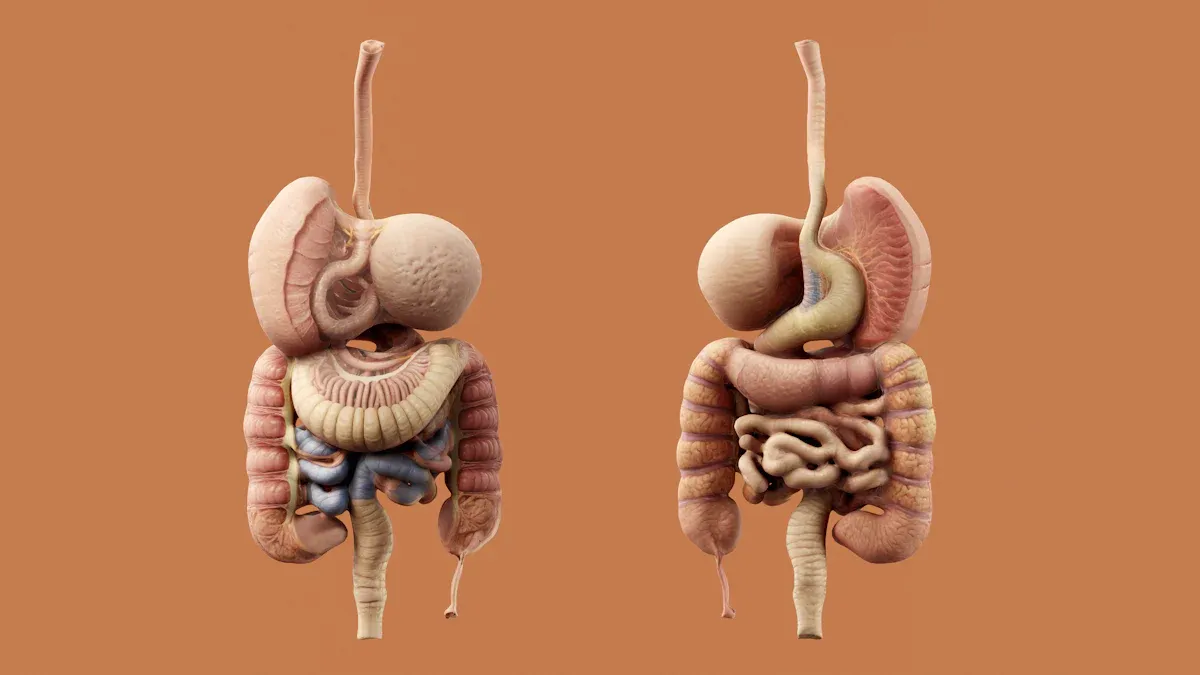
Prostate Gland
You find the prostate gland deep inside your pelvis, just below your bladder. This walnut-sized organ plays a crucial role in both sexual pleasure and reproductive health. Many people call the prostate the “male G-spot” because of its sensitivity and potential for intense pleasure. When you stimulate the prostate, you may experience unique sensations that differ from penile stimulation. Some men report full-body pleasure and even orgasms without ejaculation.
- You can reach the prostate through the rectum using a lubricated finger or a specialized massager. Anal beads also provide indirect stimulation when inserted and gently moved.
- Patience, relaxation, and open communication with your partner help you enjoy prostate stimulation safely.
- The prostate connects to a network of nerves called the prostatic plexus. These nerves link to the pelvic plexus near your spine, which amplifies sexual pleasure during orgasm.
Tip: If you want to explore prostate stimulation, start slowly and use plenty of lubrication. Discuss boundaries and comfort levels with your partner before trying new techniques. For more information on safe practices, visit Planned Parenthood’s guide to prostate health.
You may use anal beads to enhance prostate stimulation. When you insert and remove them gently, you activate the sensitive nerves around the prostate. This can heighten arousal and lead to stronger orgasms. Many sex educators share tips and experiences on social media platforms like Reddit’s r/sex and Men’s Health Twitter, where you can learn from others who have explored these techniques.
- Stimulation of the prostate can create immensely pleasing feelings and heighten orgasms.
- The prostate serves both procreative and recreative functions, enhancing the ecstasy of orgasm.
Urethra
You rely on your urethra for two essential functions: passing urine and carrying semen during ejaculation. This thin tube runs from your bladder through your penis. During sexual arousal, the urethra becomes a conduit for semen, which is necessary for ejaculation.
| Function of Urethra | Description |
|---|---|
| Conduit for Semen | The urethra allows for the passage of semen during ejaculation, which is essential for male sexual response. |
| Role in Orgasm | Rhythmic contractions during ejaculation enhance the orgasmic experience, highlighting the urethra’s importance in pleasure. |
You may notice rhythmic contractions in your urethra during orgasm. These contractions intensify your pleasure and signal the release of semen. Some men enjoy gentle stimulation of the urethral opening, but you should always use caution and avoid inserting objects unless you follow safe practices. For more details on sexual safety, check resources like Mayo Clinic’s sexual health page.
- The urethra plays a critical role in the emission of semen, which is necessary for ejaculation.
- You can explore urethral sensations by paying attention to the feeling of ejaculation and the contractions that occur.
Seminal Vesicles
Your seminal vesicles sit behind your bladder and connect to the prostate. These small glands secrete most of the fluid that becomes semen. The fluid from your seminal vesicles mixes with sperm and other secretions to form ejaculate.
| Finding | Description |
|---|---|
| Higher Activation | Men with filled seminal vesicles showed increased brain activation in areas linked to arousal and sexual desire. |
| Comparison | The study compared brain activity when seminal vesicles were filled versus emptied. |
You may experience heightened sexual desire when your seminal vesicles are full. Research shows that filled seminal vesicles increase brain activation in regions linked to arousal. During sexual response, the fluid from your seminal vesicles releases into the vas deferens and becomes part of your ejaculate.
- The seminal vesicles secrete a significant portion of the fluid that becomes semen.
- You can support the health of your seminal vesicles by staying hydrated and maintaining a balanced diet.
Note: If you notice changes in your ejaculate or experience discomfort, consult a healthcare provider. For more information, visit WebMD’s guide to male reproductive anatomy.
You may find that exploring internal anatomy, including the prostate and seminal vesicles, opens new possibilities for pleasure. Anal beads can help you discover sensations linked to these areas, especially when used with care and communication.
Cowper’s Glands
You have Cowper’s glands, also called bulbourethral glands, located beneath your prostate on either side of your urethra. These small glands play a vital role in your sexual health and pleasure. When you become aroused, Cowper’s glands release a clear, slippery fluid known as pre-ejaculate. This fluid serves several important functions that support both comfort and reproductive health:
- Lubricates the tip of your penis and the spongy urethra, making sexual activity smoother and more comfortable.
- Neutralizes any residual acidity in your urethra, which can result from urine. This creates a safer environment for sperm to travel.
- Expels any leftover residue through the urethral opening, helping to prepare a clean pathway for ejaculation.
- Secretes glycoproteins and alkaline fluid during arousal, further aiding lubrication and protection.
You might notice this fluid before ejaculation, especially during foreplay or arousal. Its presence helps reduce friction, which can enhance your pleasure and decrease the risk of irritation. If you experience dryness or discomfort, understanding the role of Cowper’s glands can help you appreciate your body’s natural lubrication process. For more information on male reproductive anatomy, you can visit Cleveland Clinic’s guide to Cowper’s glands.
Anal Beads and Prostate Stimulation
You can explore new sensations and pleasure by stimulating your prostate, often called the “male G-spot.” Anal beads offer a unique way to do this. These flexible strings of beads come in various sizes and shapes. When you insert them gently into your rectum, you can stimulate sensitive nerve endings around your prostate. Many people use anal beads for the pleasurable sensations they create as you insert or remove them, rather than for direct pressure on the prostate.
If you want to try anal beads for prostate stimulation, follow these practical steps to ensure safety and maximize enjoyment:
- Always choose beads with a flared base. This prevents them from getting lost inside your rectum.
- Clean the beads thoroughly with mild soap and hot water before and after each use. This helps maintain hygiene and reduces the risk of infection.
- Inspect the beads for any signs of damage before use. Discard them if you notice cracks or tears.
- Use plenty of water-based lubricant to make insertion comfortable and reduce friction.
- Avoid sharing anal beads unless you sanitize them properly between uses.
You might start with smaller beads if you are new to anal play. Insert them slowly and pay attention to your comfort level. During arousal, you can gently pull the beads out at the point of orgasm. Many people report that this intensifies their climax by stimulating the sensitive nerves around the prostate. For a more targeted experience, you can try beads designed with curves or larger sizes, which may provide more noticeable sensations.
Tip: Relax your body and breathe deeply before and during insertion. Communicate with your partner about your comfort and boundaries if you use anal beads together.
You can find more detailed guides and community discussions about prostate stimulation and anal beads on platforms like Reddit’s r/sex and Men’s Health Twitter. These resources offer real-life experiences and advice from people who have explored these techniques.
Exploring anal beads can help you discover new aspects of pleasure and deepen your understanding of your body. By following safety guidelines and listening to your body, you can enjoy prostate stimulation with confidence and comfort.
How Male Pleasure Works
Understanding why your body responds to sexual stimulation can help you make informed choices about pleasure and health. When you know how nerve endings, blood flow, and orgasm work together, you gain more control over your experiences and can communicate your needs more clearly.
Nerve Endings & Sensation
Your body’s pleasure starts with nerve endings. The glans, corona, and frenulum of your penis contain a high density of free nerve endings. These nerve endings respond to touch, pressure, and vibration, sending signals to your brain that create pleasurable sensations. The table below shows how different areas contribute to sensation:
| Area | Sensitivity Level | Sensation Type |
|---|---|---|
| Glans | Very High | Touch, pressure, vibration |
| Corona | High | Touch, pressure |
| Frenulum | Extremely High | Light touch, movement |
You might notice that gentle stimulation of the frenulum or corona feels more intense than other areas. This happens because these regions have more specialized nerve fibers. When you use your hand, a partner’s touch, or even anal beads, you activate these nerve endings and increase pleasure. If you want to explore new sensations, try varying the type and intensity of touch on different parts of your anatomy.
Tip: Pay attention to how your body reacts to different types of stimulation. This awareness helps you discover what feels best for you.
Blood Flow & Erection
Erections depend on healthy blood flow. When you become aroused, your brain sends signals that cause the arteries in your penis to dilate. Blood fills the erectile tissues, making your penis firm and ready for sexual activity. If blood flow is restricted, you may have trouble achieving or maintaining an erection.
- Healthy blood flow is essential for strong erections.
- Conditions like high blood pressure or atherosclerosis can damage blood vessels and reduce blood flow.
- Lifestyle choices, such as regular exercise and a balanced diet, support cardiovascular health and improve erectile function.
You can support your erection quality by managing stress, staying active, and avoiding smoking. If you notice changes in your erections, consider speaking with a healthcare provider to rule out underlying health issues.
Orgasm & Ejaculation
Orgasm is the peak of sexual pleasure. You experience it as a series of rhythmic contractions in your pelvic floor muscles, which lead to ejaculation. The process follows several stages:
- Desire: You feel sexual interest, often triggered by thoughts, fantasies, or physical sensations.
- Arousal (Plateau): Your heart rate increases, muscles tense, and sensitivity in your penis rises.
- Orgasm: You reach climax, and your body contracts to expel semen. This stage brings the most intense pleasure.
- Resolution: Your body relaxes, and you enter a refractory period before you can become aroused again.
Prolonged stimulation, such as using anal beads or focusing on different erogenous zones, can enhance arousal and lead to more powerful orgasms. Understanding these stages helps you recognize why certain techniques or experiences feel more pleasurable. If you want to extend pleasure, experiment with different rhythms and types of stimulation.
Remember, every person’s experience is unique. Exploring your body with curiosity and patience allows you to find what works best for you.
Exploring Male Pleasure
Communication & Consent
You build trust and intimacy when you communicate openly about pleasure. Creating a safe space for dialogue encourages curiosity and removes judgment. You can use active listening to understand your partner’s perspective. Before you start the conversation, reflect on your own desires. Express your needs with clear and empathetic language. Nonverbal cues, such as gentle touch or eye contact, help you convey comfort and interest. Mutual exploration and consent ensure that both you and your partner feel respected.
- Create a safe space for dialogue where curiosity replaces judgment.
- Practice active listening to fully understand your partner’s perspective.
- Understand your own desires before discussing them with your partner.
- Use clear and empathetic language to express needs.
- Incorporate nonverbal communication to enhance understanding.
- Ensure mutual exploration and consent in discussions about intimacy.
Emotional safety forms the foundation for honest conversations about sexual needs. When you approach these discussions as a team, you work together toward greater intimacy. For more guidance, you can explore resources from Planned Parenthood.
Self-Exploration Techniques
You discover what feels good by exploring your own body. Self-pleasure lets you try new sensations and stimulation methods. Experimenting with different techniques expands your pleasure repertoire. You might start slow and use a body-safe, water-based lubricant, especially for anal play. The anal area does not self-lubricate, so generous lubrication prevents discomfort. Begin with a clean, trimmed, and gloved finger. Insert gently, angling toward your belly button to locate the prostate about two to three inches in. Many men find that a prostate massager offers comfortable and ergonomic stimulation.
- Self-pleasure allows you to explore new sensations and stimulation methods.
- Experimenting with different techniques helps you discover what feels good.
- Go slow and use lube for comfort and safety.
- Start with a finger for beginners; insert gently and angle toward the belly button.
- Try a prostate massager for targeted stimulation.
- Communicate and relax; tension can make the experience uncomfortable.
You enrich your personal pleasure experiences by trying different self-pleasure techniques. Knowing your preferences helps you communicate your needs to partners, which enhances sexual satisfaction. For more tips, visit Men’s Health.
Tip: Relax your body and mind before self-exploration. Focus on what feels pleasurable and adjust your technique as needed.
Common Myths & Facts
You may encounter myths about male pleasure anatomy that can limit your understanding. One common belief suggests that a man’s identity is tied only to his penis. Scientific evidence shows that pleasure comes from many areas, not just the penis. Another myth claims that the penis is the primary means of providing pleasure to women. Studies reveal a significant difference in orgasm rates between intercourse and oral sex, highlighting the importance of varied stimulation.
“The male G-spot is the prostate. Like, everyone’s like, ‘The male G-spot is the prostate. If you have one, press it—amazing orgasms.'”
- The belief that a man’s identity is solely tied to his penis is a prevalent myth.
- It is incorrect to assume that the penis is the primary means of providing pleasure to women, as studies show a significant difference in orgasm rates between intercourse and oral sex.
You gain confidence and satisfaction when you challenge these myths and learn the facts. Exploring your body and communicating openly with your partner leads to richer, more fulfilling experiences. For more information, check out discussions on Reddit’s r/sex where people share real-life experiences and advice.
Benefits of Understanding Your Body
Enhanced Personal Pleasure
When you understand your body’s anatomy, you unlock new levels of personal pleasure. You learn how different areas respond to touch, pressure, and movement. This knowledge helps you experiment with techniques that suit your preferences. For example, you might discover that stimulating the frenulum or perineum creates sensations you never noticed before. You can also explore different types of orgasms, such as those achieved through prostate stimulation or varying the rhythm of touch.
- You gain confidence by knowing what feels good.
- You can communicate your needs more clearly to partners.
- You become more comfortable exploring new sensations.
Recognizing the complexities of arousal and acknowledging different types of orgasms can lead to greater sexual satisfaction. You take charge of your pleasure and create experiences that feel right for you.
Ways understanding anatomy enhances pleasure:
- Familiarity with external and internal structures increases sexual enjoyment.
- Improved communication with partners opens new avenues for satisfaction.
- Personal knowledge leads to more fulfilling solo and partnered experiences.
Better Partner Communication
You improve your relationships when you understand your own anatomy. You can explain what you enjoy and listen to your partner’s needs. This creates a foundation for trust and mutual respect. Research shows that anatomical knowledge helps you adjust your communication style. You move beyond stereotypes and focus on real experiences, which leads to better understanding and intimacy.
For example, you might share with your partner that gentle pressure on the perineum feels good, or that you prefer a certain type of touch. This openness encourages your partner to share their preferences as well. Over time, you both learn to adapt and respond to each other’s feedback.
Open conversations about pleasure foster stronger emotional connections and more satisfying sexual encounters.
Survey Data:
| Benefit | Percentage of Respondents Reporting Improvement |
|---|---|
| Enhanced Communication | 78% |
| Increased Satisfaction | 72% |
| Greater Trust | 65% |
You can find more tips on healthy communication at Planned Parenthood’s relationships page.
Reducing Shame & Stigma
Learning about your body helps you challenge negative beliefs about male sexuality. You replace myths with facts and gain a healthier perspective on pleasure. When you understand how the anus functions or how sphincters and lubrication work, you feel less anxious about exploring new experiences. You also help normalize practices like anal play and masturbation, which reduces shame.
| Key Finding | Description |
|---|---|
| Credible Information | Scientific insights disrupt stigma and provide accurate knowledge. |
| Counterstereotypic Info | Positive facts challenge stereotypes and promote universal understanding. |
- Understanding anatomy empowers you and reduces anxiety.
- Knowledge about safe practices creates supportive environments.
- Open discussions about masturbation and pleasure foster acceptance.
Acknowledging masturbation as a normal part of life helps you let go of shame. You build a positive relationship with your body and encourage others to do the same.
You can join supportive communities and find more information at Reddit’s r/sex or Men’s Health Twitter. These platforms offer real stories and advice from people who have overcome stigma and embraced their sexuality.
Addressing Concerns & Questions
Sensitivity Differences
You may notice that your sexual sensitivity changes over time or varies across different areas of your body. Many men share concerns about premature ejaculation and uneven sensitivity, especially around the penis. Some men experience heightened sensitivity at the glans or frenulum, while others feel less sensation in these areas. Premature ejaculation affects about 30% of men and often links to increased sensitivity. If you find that you climax faster than you want, you are not alone.
A study from 2017 showed that men with premature ejaculation had a lower tolerance for vibration, which means their nerve endings responded more quickly to stimulation. Psychological factors such as anxiety, mood changes, or past sexual experiences can also influence your sensitivity. You might notice that stress or nervousness makes you more sensitive or less able to control your response.
- Common concerns include premature ejaculation and uneven sensitivity.
- Psychological factors like anxiety and mood can affect your sexual sensitivity.
- Sensitivity levels differ across the glans, shaft, and frenulum.
If you want to manage sensitivity, you can try techniques such as changing the type of touch, using thicker lubricants, or practicing pelvic floor exercises. Open communication with your partner helps you find what works best for you.
Age-Related Changes
You may wonder how aging affects your sexual pleasure. Medical research shows that male sexual desire remains high until middle age. As you get older, you may notice changes in how your body responds. Testosterone levels decrease by nearly 1% per year after age 50. You might need more time and direct stimulation to achieve a full erection. Despite these changes, many men over 60 stay sexually active and report unchanged sexual satisfaction.
| Aspect of Sexual Pleasure | Change with Age |
|---|---|
| Serum Testosterone Levels | Decrease by nearly 1% per year after age 50 |
| Sexual Desire | High percentage of men over 60 remain sexually active |
| Erectile Function | Increased time and direct stimulation needed |
| Erectile Dysfunction Risk | 1 in 22 men aged 60-69 develop it within a year |
| Frequency of Sexual Thoughts | Decreases with age |
| Sexual Satisfaction | Remains unchanged |
| Phases of Sexual Cycle | Delays in arousal, plateau, orgasm, and resolution |
You may experience fewer sexual thoughts or dreams as you age, but satisfaction often stays the same. If you notice changes, you can adapt by exploring new techniques, focusing on intimacy, and maintaining a healthy lifestyle. Regular exercise and open communication with your partner support sexual health as you age.
When to Seek Medical Advice
You should pay attention to changes in your sexual function. Sudden or ongoing difficulty achieving or maintaining an erection may signal erectile dysfunction. If you notice a drop in sex drive, increased urinary frequency, weight gain, or physical changes like breast enlargement, these could point to underlying health issues. Changes in urinary habits, such as a weaker stream or frequent restroom visits, may indicate an enlarging prostate.
“Given the strong correlation with erectile dysfunction and cardiovascular risk, you should take sexual dysfunction seriously—especially since you have the opportunity to improve your overall health.”
If you experience any of these signs, consider speaking with a healthcare provider. Early intervention can help you address issues and protect your well-being. You can find more information and support from reputable sources such as Mayo Clinic’s sexual health page or Planned Parenthood’s men’s health resources.
Understanding your body’s pleasure anatomy empowers you to improve both personal satisfaction and relationships. When you learn about areas like the prostate and communicate openly, you reduce anxiety and build trust.
- You gain confidence by exploring your anatomy, which leads to stronger orgasms and deeper enjoyment.
- Ongoing education about pleasure supports better mental and physical health.
- Open conversations with partners help you discover new experiences and preferences.
Keep learning about your body. You deserve pleasure, confidence, and a positive relationship with your sexuality.
FAQ
What is the most sensitive part of the male anatomy?
You usually find the highest sensitivity at the glans and frenulum. Light touch or gentle stroking here often creates intense pleasure. Try different techniques to discover what feels best for you.
Learn more about sensitivity at Planned Parenthood.
How do you safely use anal beads for prostate stimulation?
You should choose beads with a flared base and use plenty of water-based lubricant. Insert slowly and relax your muscles. Clean beads before and after use.
- Start with small beads
- Communicate with your partner
- Never force insertion
Can you experience orgasm without ejaculation?
Yes, you can achieve orgasm without ejaculation, especially with prostate stimulation or pelvic floor exercises. Some men report full-body pleasure and muscle contractions.
Explore techniques at Men’s Health.
Why does sensitivity change as you age?
You may notice reduced sensitivity due to lower testosterone or changes in nerve function. You can adapt by exploring new techniques or focusing on different erogenous zones.
| Age Group | Common Change |
|---|---|
| 20-40 | High sensitivity |
| 40+ | Gradual decrease |
What should you do if you feel pain during exploration?
Stop immediately if you feel pain. Check for dryness, use more lubricant, and avoid rough movements. If pain continues, consult a healthcare provider.
Pain can signal infection or injury. Find guidance at Mayo Clinic.
How can you talk to your partner about pleasure preferences?
You can start by sharing what feels good for you. Use clear language and ask your partner about their likes.
- Suggest trying new techniques together
- Listen actively
- Respect boundariesOpen communication builds trust and intimacy.