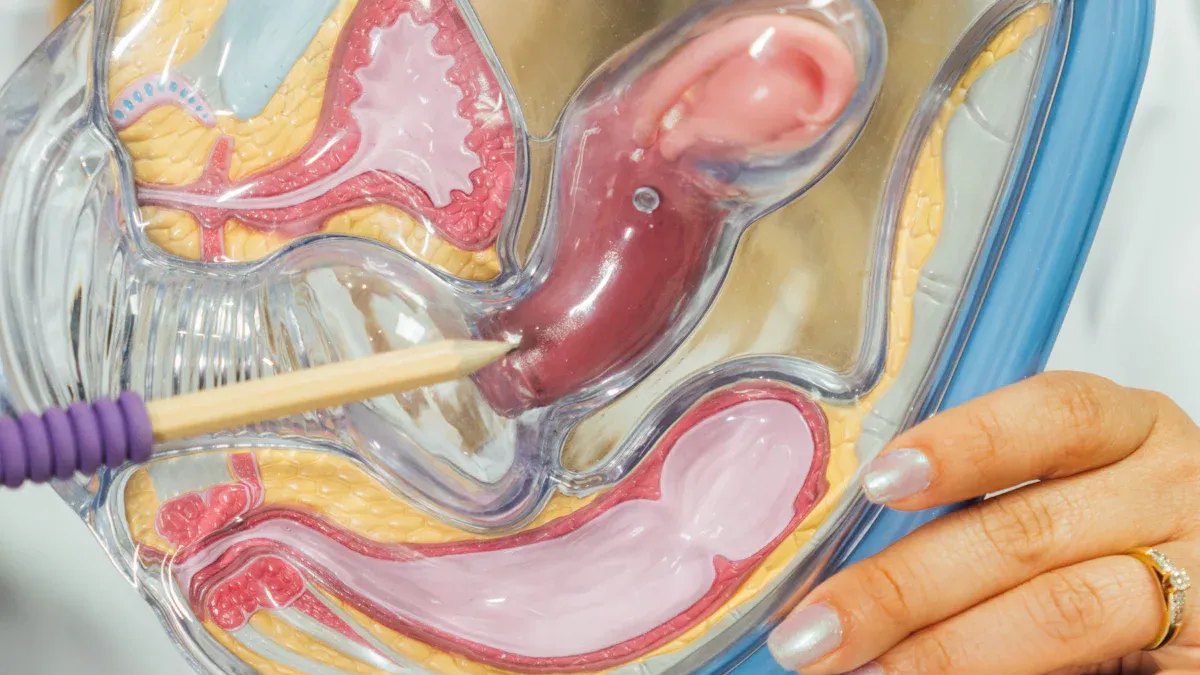
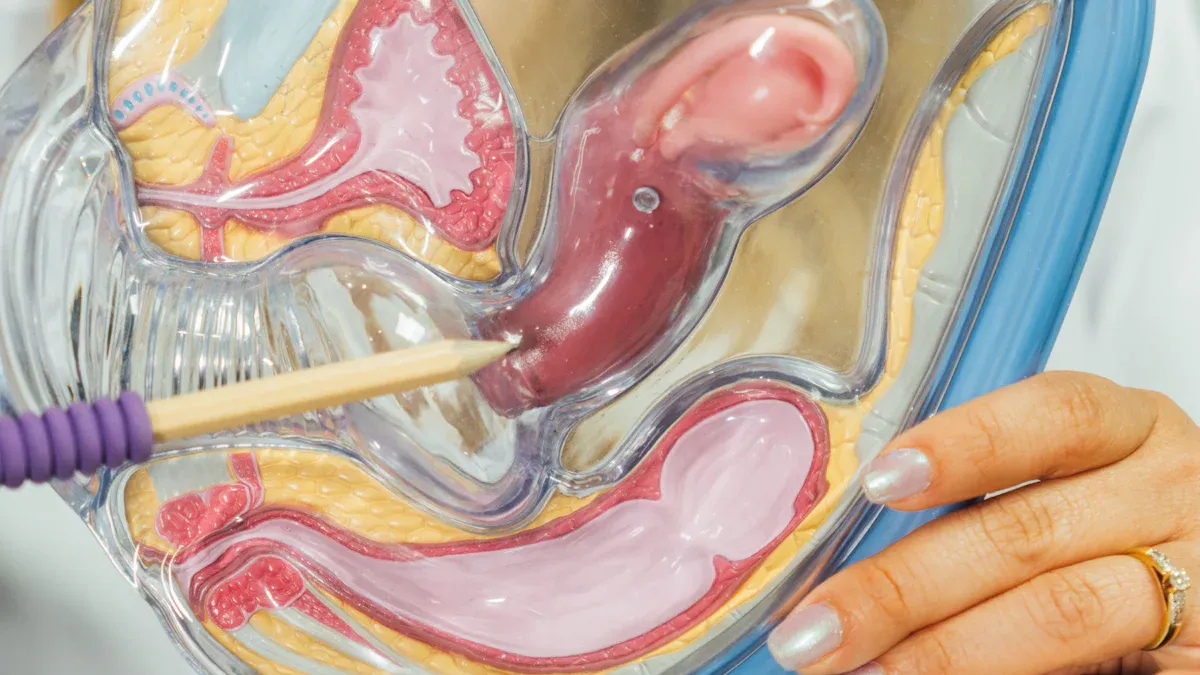
You might wonder why understanding your body’s pleasure anatomy matters. When you know how the clitoris, vulva, vagina, and G-spot work, you unlock new ways to feel good and connect with yourself. Take a look at this table:
| Anatomical Feature | Function in Pleasure |
|---|---|
| Clitoris | Main source of orgasm for most women |
| Labia | Sensitive, often touched during arousal |
| Vagina | Less sensitive, but still important |
| Anus | Can be pleasurable, especially with anal beads |
Exploring these areas helps you communicate your desires and experience more satisfaction.
Key Takeaways
- Understanding your pleasure anatomy helps you connect with your body and enhances your sexual experiences.
- The clitoris is the primary source of orgasm for most women, with over 9,000 nerve endings making it highly sensitive.
- Exploring your body with a mirror can boost confidence and help you learn what feels good.
- Communication with your partner about desires and preferences is key to a satisfying sexual experience.
- Every vulva is unique; there is no ‘normal’ appearance, and all variations are perfectly okay.
- Experiment with different types of touch to discover what brings you pleasure, whether it’s gentle or direct stimulation.
- Using pleasure tools like vibrators or anal beads can enhance sensations and make exploration more exciting.
- Your emotional state and comfort level significantly impact your ability to enjoy intimacy, so prioritize relaxation and self-acceptance.
Clitoris: Structure & Role
Anatomy Overview
External & Internal Parts
You might think the clitoris is just a tiny bump you can see, but it’s actually much more complex. Most of the clitoris hides beneath the surface, wrapping around the vaginal opening like a wishbone. Here’s a breakdown of its main parts:
| Component | Description |
|---|---|
| Prepuce | Covers and protects the glans clitoris. |
| Glans Clitoris | The visible, most sensitive part at the top of the vulva. |
| Clitoral Body | Connects the glans to the internal structures, just under the skin. |
| Angles of the Clitoris | Transition from the body to the roots, curving around the vaginal opening. |
| Roots (Crura) | Extend deep inside, surrounding the vagina like legs. |
| Vestibular Bulbs | Heart-shaped erectile tissue on each side of the vaginal opening. |
You can see that the clitoris is not just a small button. It’s a network of erectile tissue and nerves that play a huge role in pleasure.
Nerve Endings
The clitoris is packed with nerve endings—more than almost any other part of your body. This makes it incredibly sensitive to touch, pressure, and vibration.
| Structure | Number of Nerve Endings |
|---|---|
| Clitoris | 9,852 to 11,086 |
| Penis | ~18,000 |
That’s why even gentle stimulation can feel intense. If you ever wondered why some touches feel overwhelming, now you know—it’s all those nerves working together.
Location & Sensitivity
You’ll find the clitoris at the top of your vulva, right where the inner lips (labia minora) meet. It sits just above the opening of your urethra. Here’s a quick guide:
| Structure | Location Description |
|---|---|
| Clitoris | At the junction of the inner lips, above the urethra |
| Labia Minora | Meet at the clitoris |
| Urethra | Clitoris sits immediately above the urethral opening |
Because of its location, the clitoris is easy to reach with your fingers or a partner’s touch. Some people prefer direct stimulation, while others like gentle, indirect touch through the clitoral hood. You might need to experiment to find what feels best for you.
Tip: If you’re exploring for the first time, try using a mirror. This can help you see exactly where everything is and boost your confidence.
Clitoral Orgasms
The clitoris is the main source of orgasm for most women. Scientific studies show that 94% of women can reach orgasm through clitoral stimulation, while only 70% do so from deep vaginal stimulation. The clitoris’s only job is to give you pleasure—how amazing is that?
| Finding | Percentage |
|---|---|
| Women reporting clitoral stimulation can result in orgasm | 94% |
| Women reporting deep vaginal stimulation can result in orgasm | 70% |
When you stimulate your clitoris, several things happen in your body:
- Blood flow increases to your genitals.
- The vagina and labia swell and become more sensitive.
- Lubrication increases, making everything feel smoother.
- The clitoris itself becomes engorged, just like an erection.
All these changes build up to orgasm, which feels like a sudden, intense release of tension. Your muscles might contract, and you could feel waves of pleasure throughout your body.
Real-Life Example:
Jamie, a college student, shared that she didn’t realize the clitoris was more than just the visible tip. After learning about its internal structure, she tried different types of touch—circular, tapping, and gentle pressure. She discovered that slow, steady stimulation worked best for her, leading to stronger and more satisfying orgasms.
Actionable Advice
- Explore different types of touch—try light circles, gentle tapping, or steady pressure.
- Use a mirror to get familiar with your anatomy.
- Communicate with your partner about what feels good.
- Don’t rush—take your time and notice how your body responds.
Remember, every body is unique. What works for someone else might not work for you, and that’s perfectly normal. The key is to stay curious and keep exploring.
Vulva: Features & Sensitivity
Labia Majora & Minora
When you look at your vulva, you see two sets of folds: the labia majora and the labia minora. These folds protect your inner genitals and play a big part in your comfort and pleasure. The labia majora are the outer lips, usually covered with pubic hair. The labia minora are the inner lips, hairless and often more sensitive.
Here’s a quick comparison to help you understand the differences:
| Feature | Labia Majora | Labia Minora |
|---|---|---|
| Location | Outer folds of the vulva | Inner folds within the labia majora |
| Composition | Contains fat, sweat, and oil glands | Smooth, with oil glands only |
| Hair Follicles | Covered in pubic hair | No hair follicles |
| Glands | Sweat and oil glands | Oil glands only |
| Color Variation | Generally uniform | Varies from light pink to dark brown |
| Function | Protects the inner structures | Covers vaginal and urethral openings |
You might notice that your labia minora look different from someone else’s. Some are long, some are short, and some are uneven. All of these are normal! The inner labia are also highly sensitive, though not as much as the clitoris. They respond to touch and can swell during arousal, adding to your pleasure.
Tip: If you feel self-conscious about how your labia look, remember that there’s no “normal.” Every vulva is unique.
Vestibule & Urethra
The vestibule is the area just inside the labia minora. It surrounds the openings to your vagina and urethra. This spot contains sensitive tissue that reacts to touch and pressure. The urethra, which carries urine out of your body, also has erectile tissue. During arousal, this tissue swells and increases sensitivity, making stimulation in this area feel extra pleasurable.
Here’s a table to break down their roles:
| Structure | Function |
|---|---|
| Vestibule | Contributes to pleasurable sensation and supports sexual function through stimulation. |
| Urethra | Contains erectile tissue that engorges during arousal, enhancing pleasure and contributing to genital congestion. |
Some people find that gentle touch around the vestibule or urethral opening feels good. You can explore this area with clean fingers or a soft toy. Always listen to your body and stop if anything feels uncomfortable.
Myths & Variations
You might have heard myths about what a vulva “should” look like or how it should feel. Many people believe that larger labia or a certain color means something is wrong. That’s not true. Vulvas come in all shapes, sizes, and shades. There’s no ideal look or size.
- The size and appearance of the vulva vary from person to person. There’s no “perfect” shape.
- The vagina is flexible and can expand or contract. Its size doesn’t affect pleasure.
- Emotional connection, communication, and sensitivity matter more for pleasure than appearance.
A lot of people feel pressure to change how their vulva looks. In fact, about 37% of women have considered or undergone labiaplasty for cosmetic reasons. This surgery can carry risks, like decreased sensitivity or nerve damage. Many people can’t even tell the difference between natural and surgically altered vulvas, which shows how much variation exists.
Case Example:
Taylor always worried her labia were “too big.” After learning about vulvar diversity, she realized her body was completely normal. She started feeling more confident and enjoyed intimacy more.
If you ever feel unsure about your body, remember: pleasure comes from understanding and accepting yourself. Explore what feels good for you, and don’t let myths hold you back.
Vagina & G-Spot: Facts
Vaginal Anatomy
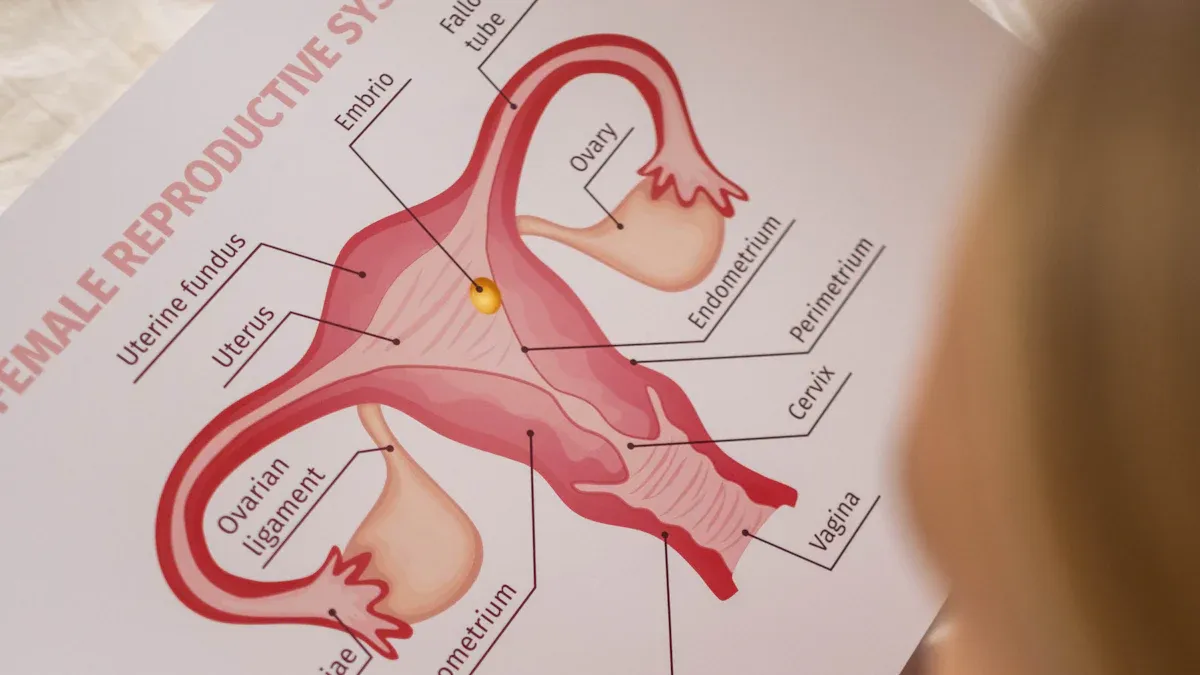
Your vagina is more than just a passageway. It’s a flexible, muscular canal that measures about 4 inches long when relaxed, but it can lengthen and expand during arousal. This adaptability helps you feel comfortable during sex or when using toys. The vagina ends at the cervix, which acts as a gateway to the uterus. Some people find that stimulating the cervix leads to a unique type of orgasm, often called a cervical orgasm. The vagina’s walls contain sensitive nerve endings, but not as many as the clitoris. Still, the area can feel pleasurable, especially when you’re aroused and relaxed.
The structures around your vagina, like the clitoris and vestibular bulbs, also play a big part in sexual pleasure. When you get aroused, blood flows to these areas, making everything more sensitive. Understanding how these parts work together can help you discover new ways to enjoy intimacy.
Tip: Try exploring your vaginal canal with clean fingers or a small, body-safe toy. Notice how the sensations change as you move or apply gentle pressure.
G-Spot Location
You might have heard about the G-spot, sometimes called the Gräfenberg spot. Many people believe it’s a real anatomical area, but research is still ongoing. Most describe the G-spot as a sensitive patch about 1–2 inches inside the front (anterior) wall of your vagina. Some people say that stimulating this area leads to intense orgasms or even female ejaculation, but not everyone experiences this.
Here’s a quick table to break down what we know:
| Characteristic | Description |
|---|---|
| Name | G-spot (Gräfenberg spot) |
| Location | 1–2 inches (5–8 cm) up the anterior vaginal wall |
| Function | May trigger strong arousal, orgasms, or female ejaculation |
| Existence | Still debated; may be part of the clitoris or vaginal tissue |
| Research History | Studied since the 1940s, but experts still disagree on its definition and location |
Some researchers say the G-spot is not a specific spot, but a dynamic area influenced by your biology and even your mood. Surveys show that about 63% of women report having a G-spot, but clinical studies find it in only about 55%. Imaging studies and anatomical research have not reached a clear answer.
- The G-spot was named after Dr. Ernst Gräfenberg in the 1940s.
- Dr. Beverly Whipple helped popularize it in the 1980s, but her findings were hard to repeat.
- Many studies show mixed results, so the G-spot remains a bit of a mystery.
Myths vs. Science
You might feel pressure to “find” your G-spot or have a certain kind of orgasm. The truth is, not everyone has the same experience. Some people never feel much from G-spot stimulation, while others love it. Science shows that the G-spot may not be a single structure, but rather a combination of sensitive tissues, nerves, and even psychological factors.
Case Study:
Alex, 27, always wondered if she was missing out because she couldn’t find her G-spot. After reading about the variety of experiences, she stopped stressing and focused on what felt good for her. She found that exploring different types of touch—inside and outside—helped her enjoy sex more, even without a “G-spot orgasm.”
Actionable Tips:
- Explore your body without expectations. Use clean fingers or a toy to gently press the front wall of your vagina.
- Communicate with your partner about what feels good.
- Remember, pleasure is personal. There’s no “right” way to experience it.
If you want to learn more, check out resources from reputable health organizations or follow sex educators on social media for tips and support. Your journey is unique, and knowledge is your best tool for pleasure.
Erogenous Zones & Pleasure Tools
Exploring your body goes far beyond the clitoris and vagina. You have many erogenous zones—areas that can spark pleasure when touched, kissed, or stimulated. Sometimes, these spots get overlooked, but paying attention to them can open up new sensations and deepen your connection with yourself or a partner. You can also use pleasure tools, like anal beads, to enhance these experiences. Let’s break down some of the most sensitive zones and how you can safely explore them.
Breasts & Nipples
Your breasts and nipples are more than just visual features—they’re packed with sensitive nerve endings that make them powerful erogenous zones. When you or your partner touch, kiss, or gently squeeze your nipples, you might notice a rush of arousal. This isn’t just in your head. Research shows:
- Breasts and nipples are recognized as erogenous zones, with nipple stimulation linked to sexual arousal.
- A significant percentage of young females (82%) and males (52%) report that nipple stimulation enhances sexual arousal.
- Nipple erection can occur due to stimulation, indicating sexual arousal, and is influenced by the release of oxytocin.
- The anatomical structure of the nipple-areolar complex is densely innervated, contributing to its sensitivity and role in sexual response.
- Female sexual response involves neurological, hormonal, anatomical, and psychosocial factors.
- The breast and nipple sensitivity plays a crucial role in arousal, orgasm, and emotional connection during sexual activity.
- Neuroimaging studies show that nipple stimulation activates brain regions similar to those activated by genital stimulation.
You might find that nipple play helps you relax, feel more connected, or even reach orgasm. Try different types of touch—light brushing, gentle pinching, or using your tongue. Notice how your body responds. If you feel comfortable, let your partner know what you like. Everyone’s sensitivity is different, so don’t be afraid to experiment.
Tip: If you want to add variety, try using temperature play—like a cool or warm cloth—on your nipples. Always check the temperature first to avoid discomfort.
Inner Thighs & Neck
Some of the most sensitive spots on your body are just outside the genitals. The inner thighs and neck can send shivers down your spine with the right touch. These areas are close to major nerve pathways, making them especially responsive.
| Erogenous Zone | Sensitivity Description |
|---|---|
| Inner Thighs | Extremely sensitive to touch; close to genitals, enhancing stimulation. |
| Neck | Identified as a key erogenous zone; particularly the back of the neck is noted for its stimulating effects. |
You can start by lightly tracing your fingers or lips along your inner thighs. This can build anticipation and make genital touch feel even more intense. The neck, especially the back, responds well to gentle kisses, soft bites, or even a warm breath. These touches can help you relax and get in the mood.
Note: If you’re exploring with a partner, ask them to pay attention to these areas. You might be surprised at how much pleasure you can feel from a simple caress or kiss.
Anal Beads & Other Tools
Pleasure tools can add a whole new dimension to your sexual exploration. Anal beads, for example, are designed to stimulate the sensitive nerves at the entrance of the anus. They come in different sizes and shapes, so you can choose what feels right for you. Many people find that using anal beads increases pleasure during solo or partnered play. The unique sensation comes from the beads being gently inserted and then slowly removed, often at the peak of arousal.
You can use anal beads to stimulate the anal sphincter muscles, which can heighten your experience. Some people combine them with other forms of stimulation, like clitoral or vaginal touch, for even more intense sensations. If you’re curious, start with smaller beads and plenty of water-based lubricant. Go slow and listen to your body.
Other pleasure tools include vibrators, dildos, and massage wands. Each tool offers different sensations, so you might want to try a few to see what you enjoy most. Remember, there’s no right or wrong way to use these tools—what matters is your comfort and pleasure.
Case Example:
Sam wanted to try something new with her partner. They talked openly about using anal beads and set clear boundaries. They started with a small set, used lots of lube, and checked in with each other throughout. Sam found the experience surprisingly pleasurable and felt more connected to her partner afterward.
Safety & Communication
Trying new things can be exciting, but safety and consent always come first. Here are some essential guidelines to keep in mind:
- Consent: Make sure everyone involved gives clear and enthusiastic consent before you start.
- Communication: Talk openly about what you want to try, your boundaries, and any concerns. Check in during and after the experience.
- Educate Yourself: Learn how to use pleasure tools safely. Read guides, watch educational videos, or follow sex educators on social media.
- Know Your Anatomy: Understand where you’re stimulating and how your body might react.
- Use High-Quality Equipment: Choose tools made from body-safe materials like silicone, glass, or stainless steel. Avoid anything porous or hard to clean.
- Start Slow: Begin with gentle touch or smaller tools. Increase intensity only if you feel comfortable.
- Establish Boundaries: Discuss limits with your partner and respect them at all times.
- Aftercare: Take time to relax and support each other after trying something new. This can help you feel safe and cared for.
Tip: Always clean your pleasure tools before and after use. Use warm water and mild soap or a toy cleaner. If you’re sharing toys, use condoms or barriers to prevent the spread of bacteria.
Exploring erogenous zones and pleasure tools can help you discover new sides of your sexuality. Stay curious, communicate openly, and always put your comfort and safety first.
Nerves, Hormones & Arousal
Understanding how your body responds to pleasure means looking at more than just anatomy. Your nerves, hormones, and even your thoughts all play a part in sexual arousal. Let’s break down how these systems work together to create those amazing sensations.
Nerve Pathways
Your body uses several nerve pathways to send pleasure signals from your genitals to your brain. Each nerve has a unique job. Here’s a quick look:
| Nerve Pathway | Function |
|---|---|
| Pudendal Nerve | Sends sensation from the clitoral sheath and perineum. |
| Pelvic Nerve | Carries arousal signals through the spinal cord. |
| Hypogastric Nerve | Controls automatic (autonomic) responses during arousal. |
| Genitofemoral Nerve | Feeds sensation to the external genitals. |
| Vagus Nerve | Bypasses the spinal cord, sending signals straight to the brain and boosting arousal. |
The pudendal and hypogastric nerves play a major role in how you feel touch and pleasure. Most of these nerves connect through the lower spinal cord, especially around the L5/6 area. If you ever wondered why some touches feel electric, it’s because these nerves are working overtime to deliver those signals.
Tip: Try gentle touch in different areas to see which nerve pathways respond best for you. You might discover new favorite spots!
Hormonal Influence
Hormones act like your body’s messengers. They can turn up your desire or slow it down. Estrogen, progesterone, and testosterone all influence how you feel about sex.
- Estrogen boosts sexual motivation and increases vaginal lubrication.
- Progesterone can lower your desire, especially before your period.
- Testosterone, though often called a “male” hormone, also helps drive your sexual interest.
You might notice that your desire changes during your menstrual cycle. When estrogen peaks around ovulation, you may feel more interested in sex. If you feel less interested at other times, that’s normal too. Low testosterone can also make you feel less desire.
Actionable Insight: Track your cycle and notice when you feel most aroused. Use this info to plan intimate moments when you’re naturally more in the mood.
Mind-Body Connection
Your mind and emotions have a huge impact on arousal. Feeling safe, relaxed, and confident can make all the difference. Stress, anxiety, or negative body image can block arousal, even if your body is ready.
- Emotional connection, trust, and comfort help foster arousal.
- Stress or distractions can make it hard to focus on pleasure.
- Confidence in your body boosts your ability to enjoy sex.
Let’s look at a real-life example.
Case Study:
Maya always felt distracted during intimacy. She realized that stress from work and worries about her body were holding her back. After practicing mindfulness and talking openly with her partner, she started to relax and enjoy sex more.
If you want to learn more about the mind-body connection, consider following certified sex educators on social media. They often share tips for building confidence and reducing anxiety.
Note: Your body and mind work together. If you feel stuck, try relaxation techniques or talk with a trusted partner or professional.
Exploring your nerves, hormones, and emotions can help you unlock new levels of pleasure. Stay curious and listen to what your body tells you!
Enhancing Pleasure Through Knowledge
Learning about your pleasure anatomy can transform your experience with intimacy. When you understand how your body works, you gain confidence and can communicate your needs more clearly. Let’s look at some ways you can use this knowledge to enhance your pleasure.
Self-Exploration Tips
Exploring your own body is one of the best ways to discover what feels good. You don’t need to rush or follow anyone else’s rules. Here are some research-backed techniques you can try:
- Practice body-connection exercises like meditation or dance. These help you feel more at home in your body and boost intimacy with yourself.
- Use sex toys safely. Many people find that toys, including anal beads, can add new sensations and make self-exploration more exciting.
- Try breathing and relaxation techniques. Slow, deep breaths help release tension and increase pleasure.
- Pay attention to sensitive areas such as the clitoris, G-spot, U-spot, and A-spot. Exploring these spots can give you a wider range of sensations.
- Keep a journal of what you enjoy. Writing down your experiences can help you notice patterns and preferences.
Tip: Set aside time just for yourself. Turn off distractions, use a mirror if you want, and focus on how your body responds to different touches.
Communicating Desires
Talking about your desires might feel awkward at first, but open communication is key to a satisfying sex life. Studies show that the quality of sexual communication matters more than how often you talk about it. Couples who share their needs and boundaries openly tend to feel closer and more satisfied.
- Share what you’ve learned about your body with your partner. This can help them understand how to please you.
- Use “I” statements, like “I enjoy gentle circles around my clitoris,” to express your preferences.
- Ask your partner about their desires, too. This builds trust and intimacy.
- Discuss boundaries and try new things together, such as using pleasure tools or exploring erogenous zones.
| Communication Habit | Impact on Relationship Satisfaction |
|---|---|
| Openly discussing desires | Higher intimacy and satisfaction |
| Avoiding the topic | Lower satisfaction and connection |
Note: You can find helpful conversation starters from certified sex educators on social media. These resources often offer scripts and tips for talking about intimacy.
Overcoming Shame
Many people feel shame or embarrassment about their sexuality. You’re not alone if you struggle with these feelings. The good news is, you can take steps to overcome shame and embrace your pleasure.
- Reflect on where your shame comes from. Understanding its roots can help you change your attitude toward sex.
- Challenge negative beliefs. Replace shame-based thoughts with affirmations and self-acceptance.
- Educate yourself with sex-positive books, podcasts, or online resources. Knowledge builds confidence and body positivity.
- Talk openly with your partner about your feelings and desires. This normalizes conversations about sex.
- Practice self-exploration with mindfulness and self-touch, without judgment.
- Consider therapy if shame feels overwhelming. A professional can help you heal and build a healthier relationship with your body.
Case Study:
Riley always felt embarrassed about using pleasure tools like anal beads. After reading sex-positive articles and talking with friends, Riley realized these feelings came from outdated beliefs. By challenging those thoughts and exploring at their own pace, Riley gained confidence and enjoyed intimacy more.
Remember, knowledge is power. When you understand your anatomy and communicate openly, you create space for deeper pleasure and connection.
Keep exploring your pleasure anatomy—you deserve to know your body inside and out. When you understand both the physical and emotional sides of pleasure, you build a strong foundation for self-care and well-being. Try these steps:
- Learn about your vulva and clitoris.
- Observe your body regularly.
- Advocate for your sexual health.
Remember: Every body is worthy of respect and admiration. Embracing your unique self leads to greater confidence and joy. 🌟
FAQ
What is the difference between the clitoris and the G-spot?
The clitoris sits outside and above your vaginal opening. It has thousands of nerve endings. The G-spot is inside, on the front vaginal wall. Some people feel pleasure from both, but not everyone does.
Can everyone have a clitoral or G-spot orgasm?
No, not everyone experiences both types. Most people find clitoral orgasms easier to achieve. G-spot orgasms vary from person to person. Explore what feels best for you.
Are all vulvas supposed to look the same?
No, every vulva is unique. Labia size, color, and shape all differ. There is no “normal” look. Embrace your body’s natural variation.
Is it safe to use anal beads or other pleasure tools?
Yes, if you use body-safe materials, lots of lubricant, and go slow. Always clean your tools before and after use. Listen to your body and stop if you feel discomfort.
How do I talk to my partner about what I like?
Start with “I” statements. For example, “I enjoy gentle circles around my clitoris.” Share your feelings and ask your partner about theirs. Open, honest talk builds trust and better experiences.
Why do I sometimes feel less interested in sex?
Hormones, stress, and mood can all affect your desire. It’s normal for interest to change. Try relaxation, self-care, or talking with your partner if you notice a drop in desire.
What should I do if I feel embarrassed exploring my body?
You are not alone. Many people feel shy at first. Start slow, use a mirror, and remind yourself that self-exploration is healthy. Learning about your body can boost confidence and pleasure.
Can pleasure tools help if I have trouble reaching orgasm?
Yes, many people find that toys like vibrators or anal beads add new sensations. Try different tools and techniques. Focus on what feels good for you, without pressure or expectations.